Montecito Already Has a Zone Zero Deadline. Sacramento Just Caught Up.
September 17, 2026
September 17, 2026
A seller's team sits down in September to prep a listing on a hillside property above East Valley Road. Someone pulls up the news from mid-August: California's Board of Forestry just approved the state's long-awaited Zone Zero wildfire rule, and existing homes get up to five years to comply once it becomes law. Relief settles in. Plenty of runway, they figure.
Except Montecito Fire Protection District has been running its own five-foot ember-resistant rule since January 1, 2026, with a three-year window for existing homes, not five. That local clock started eight months before Sacramento's did, and it is the one an inspector, an insurer, or a title company will actually reference during this fall's escrows. The state's new rule is real. It just is not the rule governing Montecito right now.
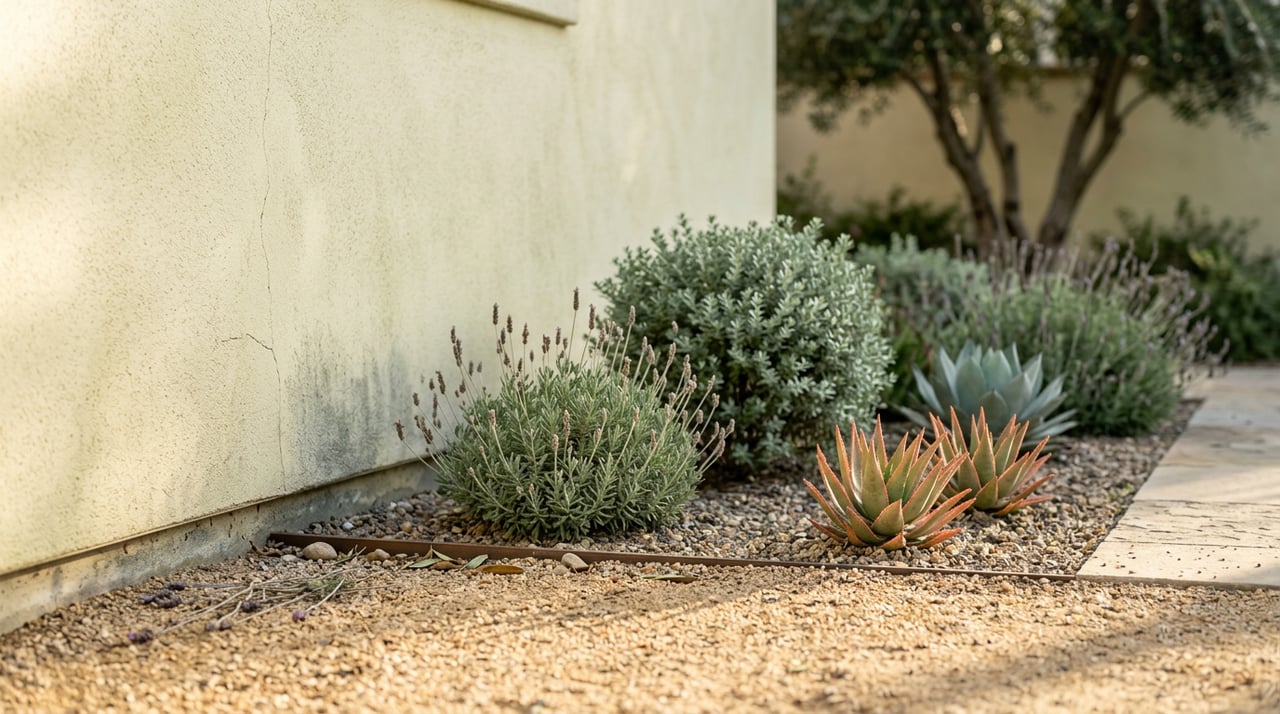
Montecito's fire district does not wait for the state to catch up. Its own adopted Fire Code and Development Standards already specify that the ember-resistant Zone 0 requirement, the noncombustible five-foot ring immediately around a structure, applies to new construction starting January 1, 2026, with existing structures given three years from that date to come into compliance. That means the local runway for existing homes closes around January 2029, roughly two years from today.
Fire Chief David Neels told the Montecito Journal last November that the district has treated this as settled territory for years, not a future obligation:
"Montecito Fire Department has been keenly aware and engaged in Zone Zero discussions over the past five years."
That framing matters for anyone comparing notes with a friend in another county. Montecito's Wildland Fire Specialists, Nic Elmquist and Maeve Juarez, already conduct roughly 200 Defensible Space Surveys a year on private properties, walking each site and documenting what needs to change before a homeowner ever sees a violation notice. The district built its own enforcement rhythm well ahead of any statewide mandate, and it has not paused that rhythm to wait for Sacramento.
On August 19, 2026, the California Board of Forestry and Fire Protection voted 8-0 to approve a final draft of the statewide Zone 0 regulation, the product of years of rulemaking under AB 3074 and a deadline Governor Newsom set through Executive Order N-18-25. It is a genuine milestone. It is also, as of this writing, not law. The approved draft still has to clear Office of Administrative Law review before it takes effect, and no statewide effective date exists yet.
Once it does take effect, the state's version applies immediately to new construction, but existing homes get a phased schedule stretching up to five years. The approved draft also carved out room that earlier proposals did not allow: lawns, flowers, and nonwoody plants up to 18 inches tall can stay within the five-foot ring, unless they sit directly under a roofline, and trees can remain as long as branches are kept five feet clear of the structure.
Here is where the comparison gets useful for anyone weighing a Montecito purchase or listing this fall:
| Montecito Fire Protection District (local) | California Board of Forestry (statewide) | |
|---|---|---|
| Status | Already adopted and enforced | Final draft approved August 19, 2026; not yet law |
| New construction | Effective January 1, 2026 | Effective once regulation is finalized |
| Existing structures | Three-year runway from January 1, 2026 | Up to five-year phased runway once finalized |
| Who enforces it today | Montecito Fire, via annual inspections | No enforcement yet, pending OAL review |
A buyer's agent who only checks the state timeline will underestimate how much runway actually remains on a specific Montecito property. The local standard is the one already shaping inspections, disclosures, and insurance conversations in the district right now.
California's Fire Hardening and Defensible Space Disclosure requirement, created under AB 38, has applied statewide since July 1, 2021. For any one-to-four unit residential sale in a high or very high fire hazard severity zone where a Transfer Disclosure Statement is required, the FHDS addendum has to accompany the contract. Montecito sits squarely in that zone designation, so this paperwork is already routine here, not a new wrinkle introduced by Zone Zero.
What is newer is how the local compliance calendar intersects with that paperwork. Montecito Fire's annual Hazard Abatement Inspections begin each year on June 1, checking defensible space, roadside clearance, and gate access against the district's own Development Standards, the same document that set the January 2026 Zone 0 date. If a property fails, the owner typically has about two to three weeks to fix the issue before a required re-inspection. A seller who lists in late spring or summer without confirming their property already passed that year's inspection risks a violation notice landing mid-escrow, which then has to be resolved on that same two-to-three-week clock while a buyer's lender is watching the file.
Insurance adds a second layer of urgency that does not wait for any regulation to become official. California's Safer from Wildfires framework already requires insurers to factor documented mitigation work, including defensible space compliance, into pricing and renewal decisions. Montecito Fire has been explicit that the district's own Home Hardening Assistance Program exists partly because of what it describes as significant cuts in homeowners' insurance affecting residents across the community. Underwriters are not waiting for Sacramento's OAL review either.
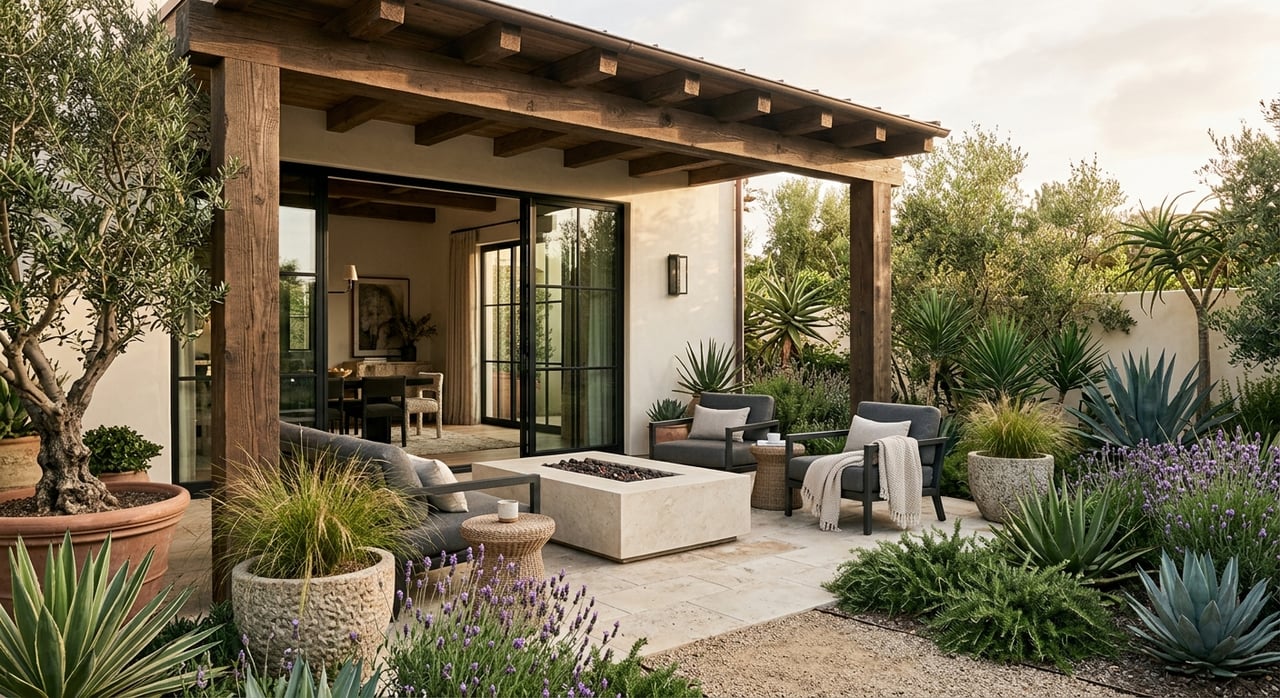
Montecito's built character raises the stakes on all of this. Properties here tend toward mature specimen oaks, sprawling hedgerows, and gardens designed over decades, not the tighter, younger landscaping typical of a standard subdivision lot. That character is part of what buyers pay for. It is also what makes a five-foot compliance ring more complicated to execute cleanly, since the plantings closest to a Montecito house are often the oldest and most established on the property, not an afterthought that can be swapped for gravel in an afternoon.
The district's own Home Hardening Assistance Program, funded through an annual allocation from its Fire Defense Zone budget, reimburses property owners up to $10,000 for eligible hardening projects. To qualify, a homeowner has to start with a Defensible Space Inspection from one of the district's Wildland Fire Specialists, then hire a contractor for the approved work before requesting reimbursement. For an estate-scale property, that ceiling covers a meaningful first step, roof and vent work in particular, but rarely the full scope of what a large, mature lot needs to satisfy both the local Zone 0 standard and the eventual state one.
A few moves are worth making before either side signs anything:
Does the new state Zone Zero rule apply to my Montecito home today? Not yet. The Board of Forestry's August 2026 approval is a final draft awaiting Office of Administrative Law review, with no statewide effective date set. Montecito's own three-year local runway, running from January 1, 2026, is the schedule already in force here.
What happens if a hazard abatement violation notice arrives while my home is in escrow? The district typically allows about two to three weeks to correct the issue before a required re-inspection. Building that window into a closing timeline, rather than discovering it mid-transaction, keeps a sale on track.
Is defensible space compliance legally required to sell a home in Montecito? The Fire Hardening and Defensible Space Disclosure addendum has been required statewide since July 1, 2021 for qualifying sales in high and very high fire hazard severity zones. It documents hazard status rather than certifying full Zone 0 compliance, which is a separate conversation with the fire district.
Fire compliance timing is one more variable that belongs in the same disciplined column as financing terms and inspection contingencies, not an afterthought bolted on at the end. If you are weighing a sale or a purchase in Montecito this fall and want a clear read on how these local and state timelines intersect with your specific property, Vince Caballero is glad to walk through it. You can also request a confidential home valuation to start that conversation with real numbers in hand.