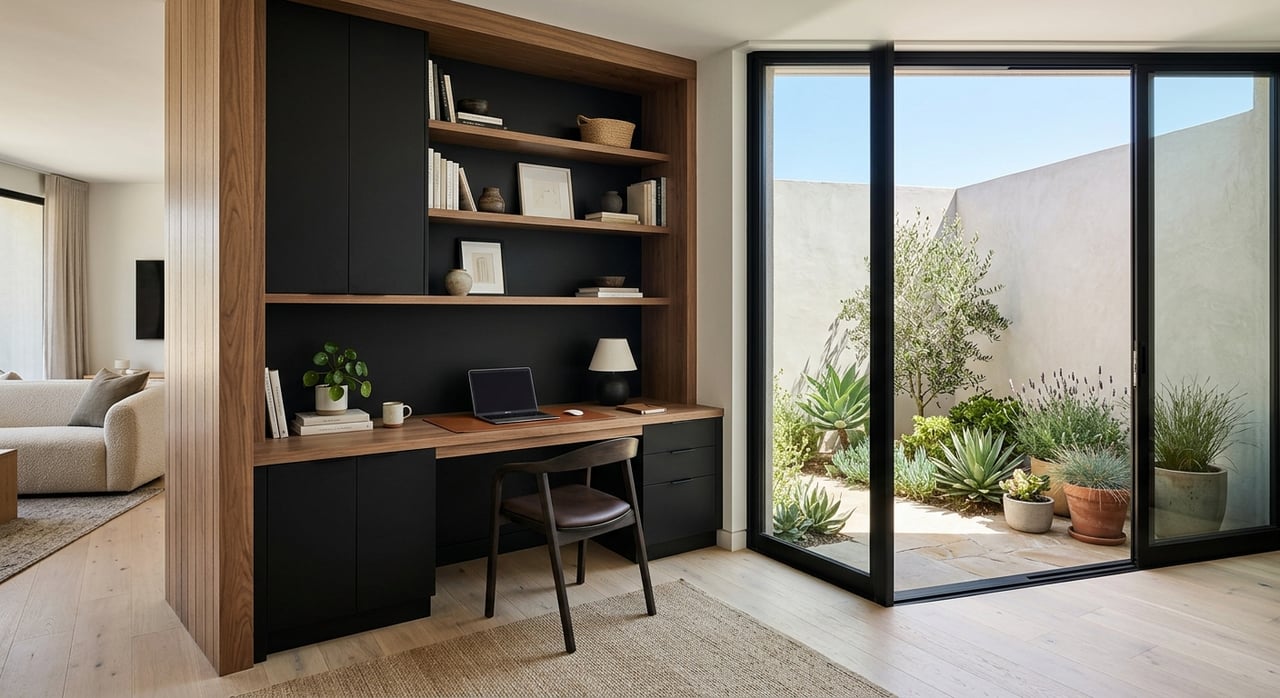
Goleta Homes For Professionals, Commuters, And Investors
July 16, 2026
July 16, 2026
If you want a home in Goleta, your decision may have less to do with simple map pins and more to do with how you live day to day. In a city where major employers, UCSB access, transit lines, and key road corridors all shape convenience, the right fit often comes down to commute patterns, maintenance goals, and long-term financial strategy. Whether you are buying as a working professional, a commuter, or an investor, this guide will help you compare Goleta with more clarity. Let’s dive in.
Goleta is a compact coastal city of about 32,611 residents spread across 7.85 square miles. The city describes itself as a mixed residential and employment market with single-family homes, multi-family apartments, a busy Old Town commercial district, shopping centers, and high-tech businesses.
That mix matters because it gives you more than one way to live here. You can focus on access to work, lower-maintenance housing, proximity to services, or a longer-term investment outlook without treating every part of Goleta as the same.
Goleta’s housing and income numbers also frame the market clearly. Median household income is $122,370, median owner-occupied home value is $1,062,100, median gross rent is $2,437, and mean travel time to work is 17.8 minutes. In practical terms, many buyers here weigh convenience, upkeep, and carrying costs just as heavily as the purchase price.
If you work in or near Goleta, a home search usually starts with access. The City of Goleta’s FY2025 ACFR lists major nearby employers that include UCSB, AppFolio, Raytheon, Sansum Clinic, The Ritz-Carlton Bacara, Deckers Brands, Goleta Union School District, Teledyne FLIR LLC, Karl Storz Imaging, Jordano’s, Bruker Nano, and Inogen.
For many professionals, that means your short list should be built around transportation corridors first. Goleta’s General Plan identifies US-101 and SR-217 as critical transportation facilities and highlights Hollister Avenue, Cathedral Oaks Road, Fairview Avenue, Storke Road, and Patterson Avenue as important shared streets.
In other words, your daily routine may be shaped more by corridor access than by neighborhood identity alone. A home that trims decision fatigue from your commute can have real lifestyle value, especially in a market where your time is one of your most expensive resources.
When you compare homes, it helps to rank features by function:
If you work remotely part of the week, you may be able to trade a shorter commute for a different housing setup. That could mean more interior space, a detached home, or a location that feels less corridor-driven while still keeping Goleta access within reach.
For commuters, Goleta is not just a driving market. Santa Barbara MTD’s current route map shows direct Goleta service on Line 6, Line 7, Line 11, Line 12x, Line 24x, and Line 25.
That gives some buyers a practical alternative to full car dependence. Areas close to these routes may be worth stronger consideration if you want transit flexibility, easier access to Old Town, UCSB, the airport, or a more efficient daily routine.
Goleta is also planning for stronger regional connectivity. The city says it is developing a new full-service multi-modal train station next to the existing Amtrak platform on South La Patera Lane to improve rail ridership and bus, airport, UCSB, and bike and pedestrian connections.
SBCAG also operates transportation programs that include Train to Work and Clean Air Express commuter bus service into Goleta and Santa Barbara. If your schedule includes regional travel, these systems can become an important part of how you evaluate location value.
Before you choose an area, ask yourself:
The answers can help you narrow your search faster and avoid paying for features you may not use.
Goleta’s official district map offers a useful framework for comparison. District 1 is the Northeast/Fairview area, District 2 is the Southeast/Old Town area, District 3 is the Northwest/Winchester area, and District 4 is the Southwest/Ellwood area.
These are not one-size-fits-all lifestyle labels, but they are a practical starting point. For most buyers, the better question is not “Which area is best?” but “Which area best supports my work, mobility, and property goals?”
Old Town is often a logical place to start if you want a more service- and transit-oriented search. The city identifies Old Town as the historic center of town and says it is focusing on bike and pedestrian improvements, parking, and alternative transportation there.
MTD Lines 7 and 11 serve Old Town or nearby Downtown Goleta corridors. That can make this area especially useful for buyers who want convenience, access to daily services, and multiple ways to get around.
Because this is an active part of the city, your decision here may come down to whether you value proximity and practicality over a quieter or more detached setting. For some buyers, that trade-off is exactly the point.
Fairview and other central-east corridors are often worth a close look for buyers focused on commuting. The General Plan’s emphasis on Fairview, Storke, Hollister, and Patterson suggests that buyers in these areas may pay closer attention to freeway access, traffic flow, and daily route efficiency.
This area can make sense if you want to stay central to major movement patterns across Goleta. For professionals with regular office travel, that kind of location logic often matters more than broad lifestyle assumptions.
Winchester and Ellwood offer a different comparison set. MTD Line 25 serves Ellwood and Winchester Canyon, and the city’s strategic materials note additional passive open space on Ellwood Mesa.
For buyers, this west-side bucket may offer a different balance of access, setting, and housing type than the central corridor areas. If you want to compare practical mobility with a different day-to-day feel, this is an important part of the shortlist.
Goleta includes both single-family homes and multi-family apartments, so property type matters. Instead of treating the city as one market, it is smarter to compare detached homes, condos and townhomes, and smaller multifamily options based on your actual use case.
Detached homes can make sense if you want more privacy, more interior or outdoor space, or longer-term flexibility. They may also appeal to remote or hybrid workers who spend more time at home and want room to support that lifestyle.
The trade-off is usually a higher purchase price and more maintenance responsibility. In a high-cost market, that means you should look closely at total carrying costs, not just the headline list price.
Condos and townhomes can be a strong fit for professionals, downsizers, and buyers who want lower-maintenance ownership. If your priority is location efficiency and simpler upkeep, these options may deserve more attention.
They can also make sense if you want to stay near key corridors or service areas without taking on the full maintenance burden of a detached property. For many busy buyers, that trade-off is financially and personally attractive.
If you are buying with income potential in mind, a smaller multifamily or rental-oriented property may seem appealing. But in Goleta, underwriting discipline matters.
This is not a market to approach with loose assumptions. Tight supply can be a positive signal, but local operating rules and holding costs deserve careful review.
Goleta’s rental market is tight. In Ordinance No. 25-06, the city states that 47% of renter households are cost-burdened, the median advertised rent for a two-bedroom apartment was $4,183 in the South Coast rent survey, and the vacancy rate was under 1% based on 2019 to 2023 ACS data.
The same ordinance says the city has long-term low vacancy rates tied to an ongoing housing shortage. For investors, that points to durable demand, but it does not remove the need for careful analysis.
Goleta’s housing page also says Chapter 8.19 of the Goleta Municipal Code is more protective than state law. It includes a mandatory one-year lease offer, no-fault just-cause noticing, relocation assistance requirements, and anti-harassment provisions.
That means your purchase should be evaluated with a full understanding of local tenant protections. In a market like this, disciplined underwriting, legal awareness, and realistic time horizons matter more than aggressive rent-growth assumptions.
If you are evaluating an income property, focus on:
Goleta’s housing profile shows a 50.7% owner-occupied housing rate, a median owner-occupied value of $1,062,100, and a median gross rent of $2,437. That mix suggests a market where precision often matters more than speed.
Goleta can be a strong market for professionals, commuters, and investors, but the right purchase depends on matching the asset to your real-life pattern. In a compact city with meaningful price points, transportation corridors, and local tenant rules, a smart decision comes from structure, not guesswork.
That is especially true when you are balancing commute convenience, maintenance exposure, and longer-term value. A disciplined review of location, property type, and ownership costs can help you avoid a home that looks right on paper but feels inefficient in practice.
If you want help comparing Goleta homes with a more strategic, financially grounded approach, Vince Caballero offers personalized guidance shaped by deep local knowledge and decades of financial experience.

Community, Philanthropy, Santa Barbara Lifestyle

Community, Philanthropy, Santa Barbara Lifestyle